THE LIMITED TRADITIONAL APPROACH
Undetected corrosion is often the failure mechanism of post tensioned bridge collapses, such as the Morandi Bridge in Genoa, it is these hidden defects which often belie the apparent integrity of bridges.
Unfortunately, the required inspection program in its traditional form is time consuming and limited in its methodology. Restrictive possession times for inspections also compound the situation because the common place (traditional) methodology is slow and out-dated which often results in hidden defects remaining undetected.
THIS IS NOT A FLASH IN THE PAN
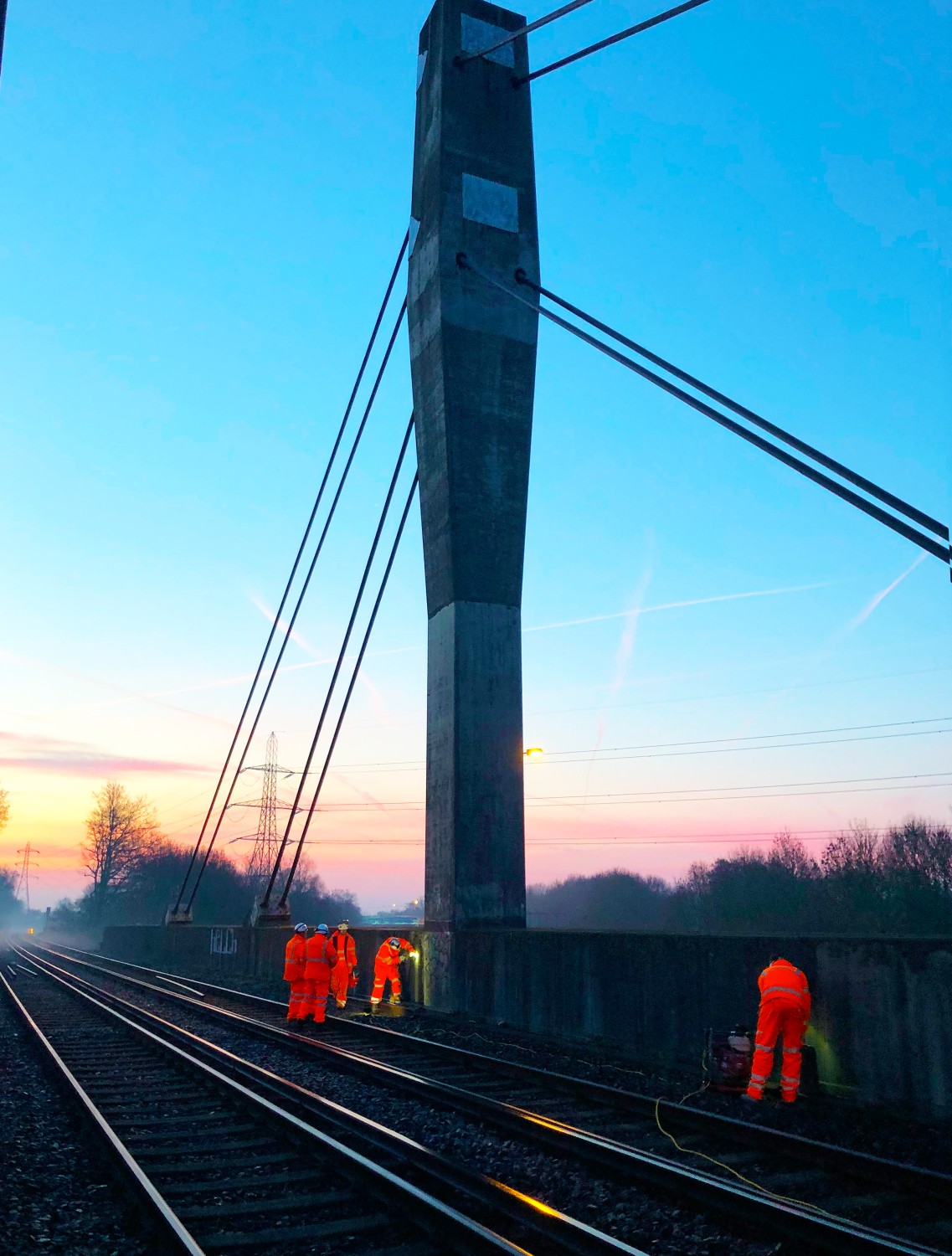
A more comprehensive approach has been overdue for many years and in 2017 Henderson Thomas Associates (HTA) who have inspected 1000’s of bridges over the last 25 years, introduced their innovative 3 Step PTSI Approach on a major post tensioned bridge in the UK.
Subsequently, HTA have inspected numerous bridges in this way by HTA. Continued R&D in the UK and Europe alongside engineers and technology manufacturers has also led to this approach being adopted by Network Rail, TFL & Leading Consultants.
THE PHYSICS DON'T LIE
Physics dictate that tendon corrosion can only be found where there is a lack of grout, as this air pocket (voidage) exposes the steel to air and corrosive elements, if it is fully grouted the tendons are protected by the grout’s alkalinity.
Therefore, detection of voidage should be the primary focus of any PTSI and scanning for this feature across the entire length of a tendon is now possible with accuracy.
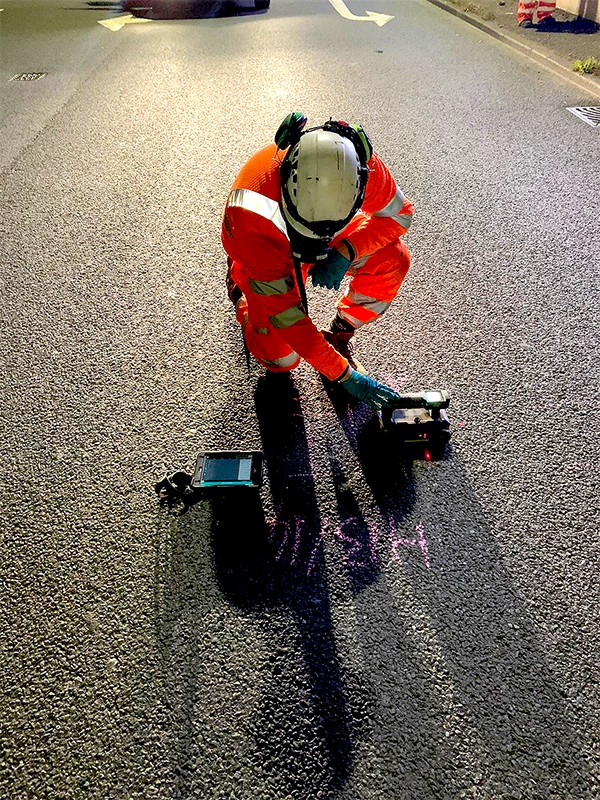
The HTA approach employs Ground Penetrating Radar (GPR) to locate tendon ducts and their profile, this is followed by Tomography (Ultrasonics) to highlight any hidden voidage. Finally targeted intrusive investigations are carried out to confirm the digital data.
During a standard rail possession this innovative approach can inspect exponentially more of the duct(s) than common place techniques alone, given the correct site conditions.
However, expertise and experience in the employment of radar and ultrasonic technology is necessary for the 3 step approach detailed below to be successful.
THE APPROACH
1: Locate Tendon Ducts and their Profile
Initially the engineer employs Ground Penetrating Radar ‘GPR’ to locate the Tendon Duct and determine duct profile.
Without GPR, engineers traditionally drilled the concrete via guesswork (stitch drilling) to locate the tendon and its profile. Resulting in unnecessary asset damage, longer site times and more expense for the client.
2: Accurately detect potential Voidage
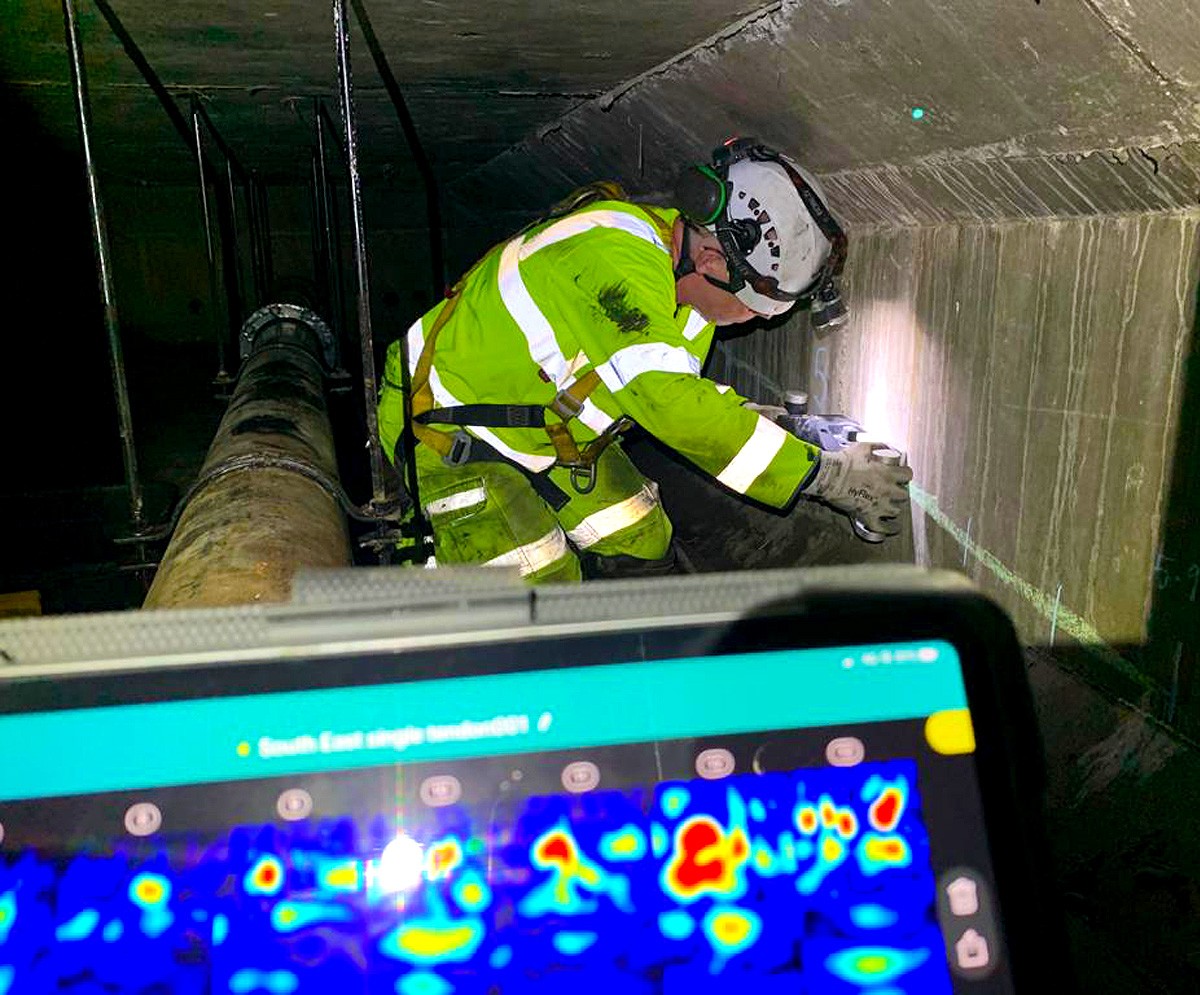
Having ascertained duct profile, the engineer is then in a position to scan the length of the duct to detect any potential voidage.
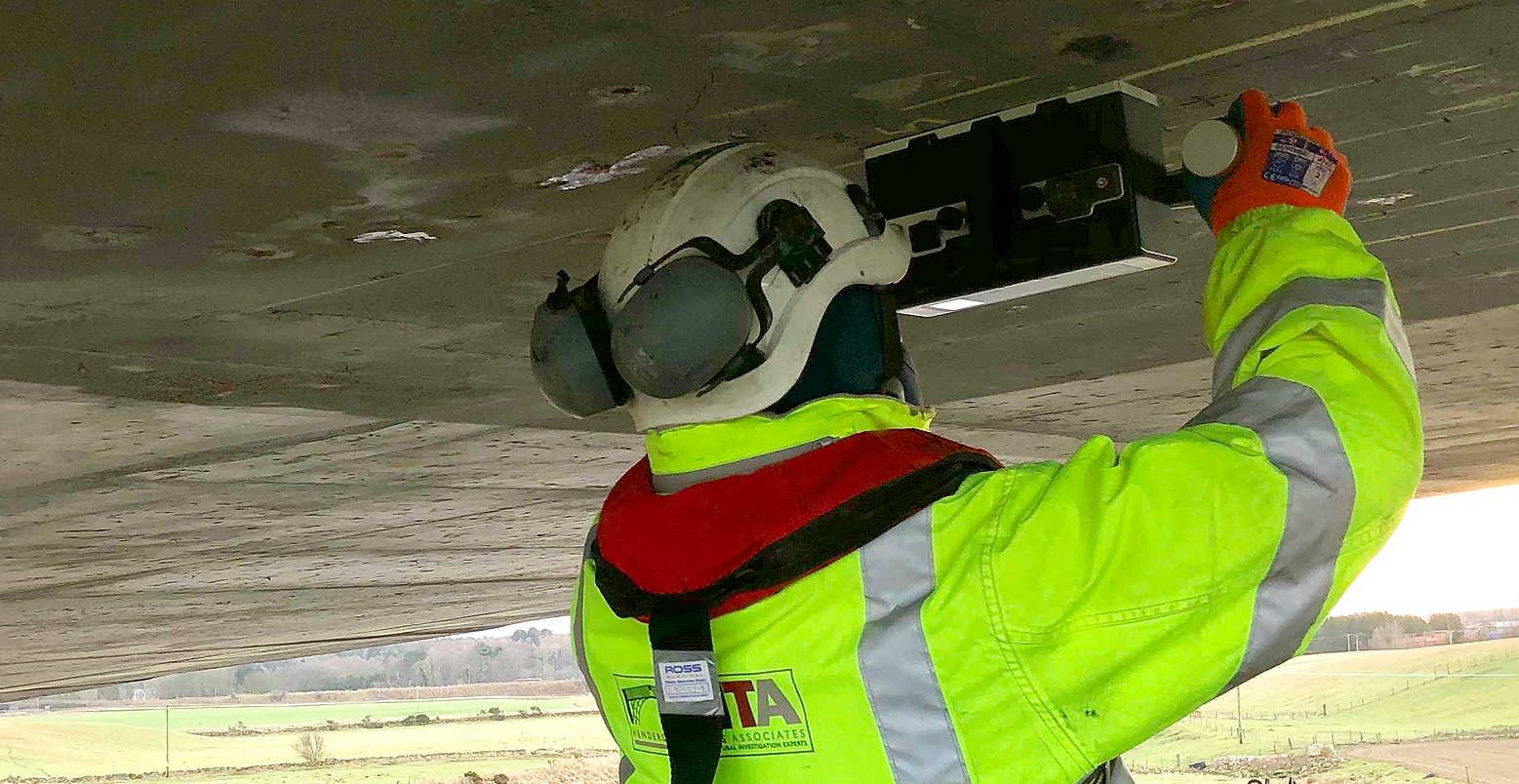
This is carried out using the Proceq Pundit Live Array Pro. This NDT device uses ultrasonic technology which highlights air gaps (voidage) within tendon ducts.
3: Targeted, Localised, Intrusive Investigations
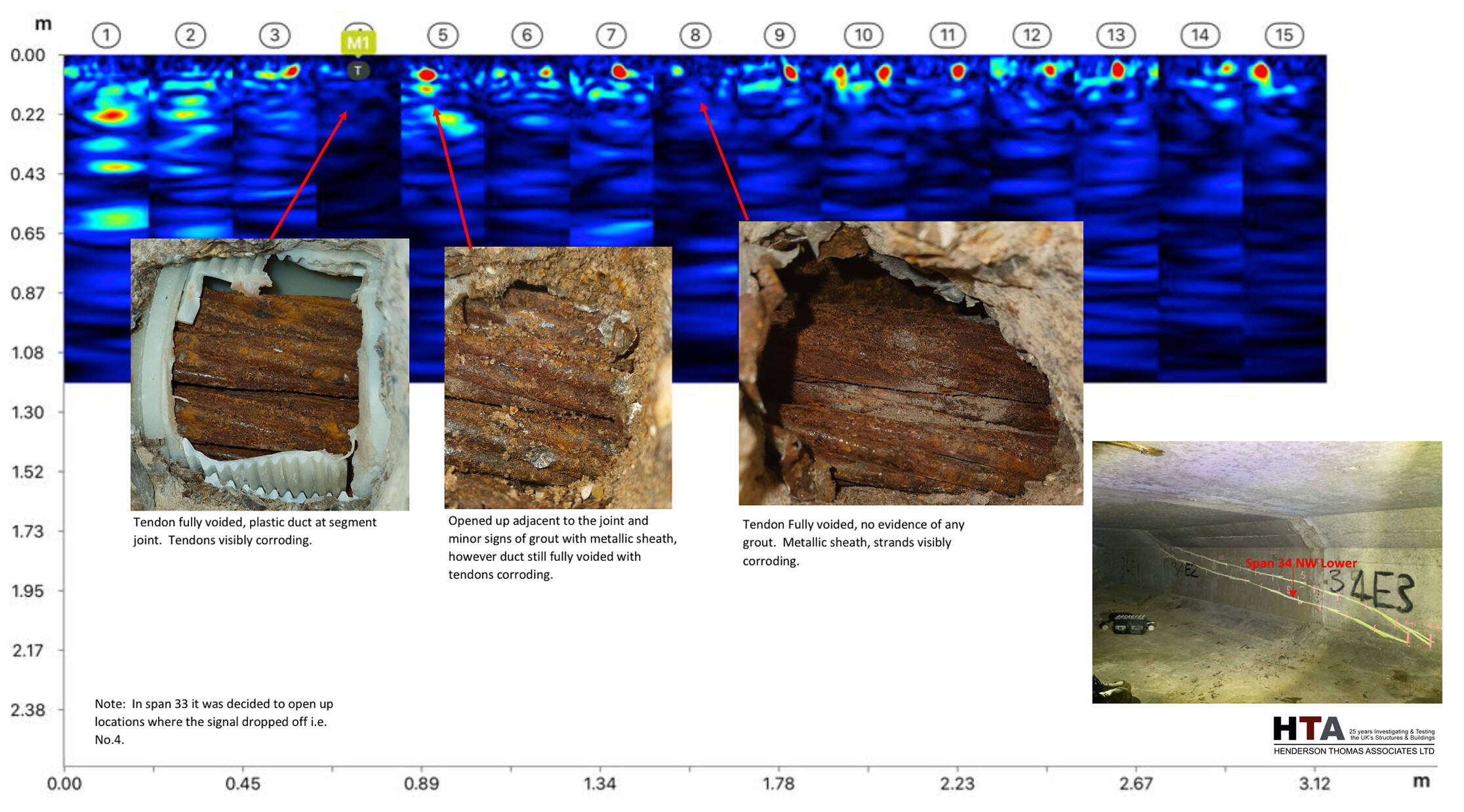
It is also vital to calibrate the data received. Examination of data on-site will highlight areas of potential voidage within the ducts allowing targeted intrusive investigations to be undertaken at these areas. As can be seen below.
THE TRUTH SHALL SET YOU FREE
IN SUMMATION
Today there is a fundamental lack of understanding of the technology that can aide in the investigation of a post tensioned bridge assessments. Hidden voidage detection is complex in nature and employment of technology is vital.
Therefore, its application will always demand experienced and trained engineers are carrying out such work. Without implementing these latest techniques the Structural Testing and Investigations Industry will be stuck in the destructive and guesswork approach of old.
OUR OPEN DOOR POLICY
“In our industry it is our duty to share knowledge when we acquire it.
Because, we are in the SAVING LIVES business, not the SAVING STRUCTURES Business.
As many will have seen we have begun carrying out webinars to share this knowledge to assist the industry in moving forward.
Do get in touch with any questions and take advantage of our Open Door Policy.
Even if you do not ultimately use HTA we are still happy to advise.”
Warren Thomas – Director
► 01707 327 785 ► testing@hendersonthomas.co.uk ► hendersonthomas.co.uk #WeAreHTA